

1. Adult Sleep Bruxism: The Silent Destroyer of Teeth and Implants
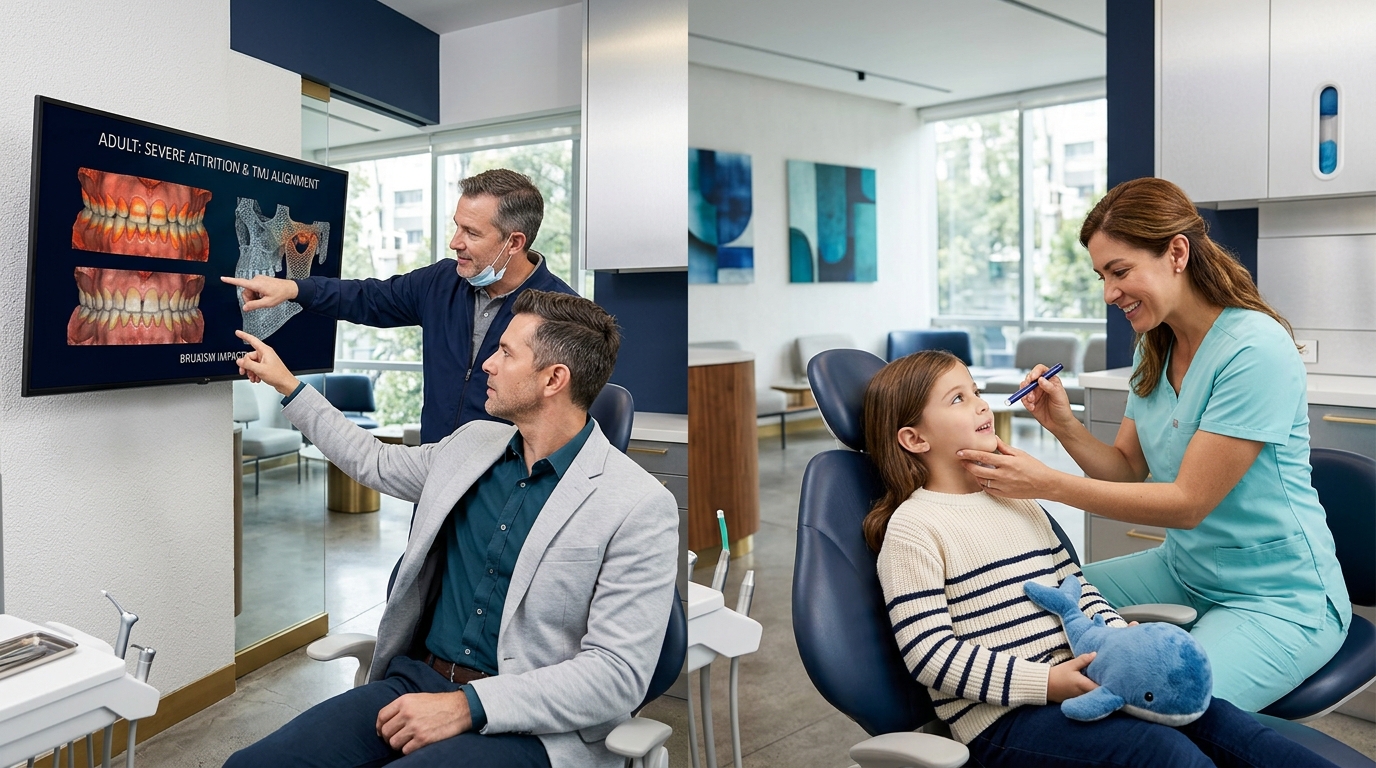
In the clinical practice of Dr. Rafael Scott and Dr. Alberto Scott in Polanco, many executives and professionals seek consultations not for acute dental pain, but for advanced signs of nocturnal occlusal overload.
During deep sleep, the brain loses conscious inhibitory control over the bite. Involuntary clenching and grinding forces can exceed 100 to 120 kg/cm² (up to 6 times the force of ordinary chewing). This biomechanical stress produces:
- Enamel Attrition and Loss: Flattened, chipped, or translucent incisal edges with exposed dentin and heightened thermal sensitivity.
- Cervical Abfractions and Gum Recession: Enamel flaking near the gumline caused by excessive lateral tooth flexing, frequently misdiagnosed as "aggressive brushing."
- Loss of Vertical Dimension (Occlusal Collapse): Severe molar wear shortens facial height, resulting in premature facial aging and temporomandibular joint (TMJ) pain.
- Risk to Dental Implants: Unlike natural teeth—which possess a cushioning periodontal ligament—implants are rigidly osseointegrated into bone. Bruxism overload can loosen prosthetic abutments or cause ceramic fractures.
2. Pediatric Bruxism: The Hidden Signal of Airway Obstruction and Stress
For Dra. Ana Cristina Turcios (Pediatric Dentistry), nocturnal grinding in young patients should never be dismissed as a harmless phase. Recent clinical literature (PubMed / Mani-García et al., 2023) confirms pediatric bruxism as a key indicator of sleep-disordered breathing:
- Mouth Breathing & Obstruction: Children with enlarged tonsils, adenoids, or allergic rhinitis sleep with an open mouth. The central nervous system triggers jaw muscles to advance the tongue and clear the pharyngeal airway during micro-suffocations.
- Narrow High-Arched Palate: Lack of proper nasal breathing hinders upper jaw expansion, requiring early pediatric maxillofacial orthopedics.
- Screen Overstimulation and Anxiety: Evening screen exposure disrupts melatonin and deep non-REM sleep cycles, triggering nocturnal grinding and restlessness.
"Sleep bruxism in both adult and pediatric patients is a central motor marker. In adults, it is strongly modulated by psychosocial distress and obstructive sleep apnea; in children, it directly correlates with upper airway resistance and daytime behavioral disorders."
— Sleep Medicine Reviews & Journal of Oral Rehabilitation3. Comparative Overview: Adult vs. Pediatric Sleep Bruxism
| Clinical Dimension | Adult Bruxism | Pediatric Bruxism |
|---|---|---|
| Primary Cause | Chronic work stress, sleep apnea, occlusal instability | Upper airway resistance (tonsils/adenoids), school stress |
| Main Consequence | Severe enamel wear, abfractions, crown/implant fracture | Restless sleep, mouth breathing, dark circles, daytime fatigue |
| Pain Presentation | Morning jaw stiffness, temporal headaches, neck/ear pain | Rarely report pain; parents hear loud grinding sounds at night |
| Recommended Therapy | 3D precision rigid night guard or MAD sleep device | Maxillofacial orthopedics (palatal expansion), sleep hygiene |
Clinical Test: Bruxism, Airway & Tooth Wear Risk
Designed for adults or parents evaluating their child. Answer these 6 quick questions to determine your occlusal and airway risk level.
Clinical Frequently Asked Questions (FAQ)
Scientific References & Clinical Evidence (PubMed):
- Lobbezoo F, et al. (2018). International consensus on the assessment of bruxism: Report of a work in progress. Journal of Oral Rehabilitation.
- Mani-García S, et al. (2023). Sleep-disordered breathing and sleep bruxism in pediatric patients: A systematic review and meta-analysis. Sleep Medicine Reviews.
- Kato T, et al. (2013). Topical review: Sleep bruxism and its relationship to sleep-disordered breathing. Sleep and Biological Rhythms.
- Lavigne GJ, et al. (2008). Neurobiological mechanisms involved in sleep bruxism in adults. Critical Reviews in Oral Biology & Medicine.
Looking for an airway and bruxism evaluation in Polanco?
Schedule a comprehensive consultation with the interdisciplinary medical team at Consultorio Dental Scott. We assess maxillofacial structure, airway volume, and occlusal patterns using advanced 3D scanning for adults and children. International insurance (Healix) accepted.
Schedule an Evaluation in PolancoMedical Responsibility Disclaimer: The information provided in this publication is for educational, academic, and informational purposes only. Sleep bruxism and airway disorders must be diagnosed through in-person clinical examinations at Consultorio Dental Scott (Homero 205, Polanco, Mexico City). This content does not constitute formal medical diagnosis.